<meta name='google-adsense-platform-account' content='ca-host-pub-1556223355139109'/> <meta name='google-adsense-platform-domain' content='blogspot.com'/> <!-- --><style type="text/css">@import url(https://www.blogger.com/static/v1/v-css/navbar/3334278262-classic.css); div.b-mobile {display:none;} </style> </head><body><script type="text/javascript"> function setAttributeOnload(object, attribute, val) { if(window.addEventListener) { window.addEventListener('load', function(){ object[attribute] = val; }, false); } else { window.attachEvent('onload', function(){ object[attribute] = val; }); } } </script> <div id="navbar-iframe-container"></div> <script type="text/javascript" src="https://apis.google.com/js/platform.js"></script> <script type="text/javascript"> gapi.load("gapi.iframes:gapi.iframes.style.bubble", function() { if (gapi.iframes && gapi.iframes.getContext) { gapi.iframes.getContext().openChild({ url: 'https://www.blogger.com/navbar/16736154?origin\x3dhttp://protheism.blogspot.com', where: document.getElementById("navbar-iframe-container"), id: "navbar-iframe" }); } }); </script>
17 comments | Thursday, September 28, 2006

In response to a claim that creationism and ID are unfalsifiable and therefore “not science”, I left the below comment. I though I would post it here as well:

The Designer is not falsifiable per se (I’ll agree). However, creationism makes falsifiable claims. There is more to creationism than “God created the heavens and earth.” When you say that creationism is “not falsifiable”, it comes off (on my end) as a blanket statement. I see it all the time. “Creationism is not falsifiable” on the one hand, but on the other “creationism is demonstrably false” It sounds schizophrenic (CS is simultaneously unfalsifiable and falsified).

Creationism is filled with assumptions that can be tested. However, on both sides of the fence, there are theories that are abstract; they are general concepts that by no means be tested directly. Moreover, only predictions about the physical world which can be drawn from the theory can actually be subjected to test or experimentation. This puts God out of the field of testability and thus He is un-falsifiable in relation to direct scientific detection.

Another thing is that falsification seems to be inappropriately used as this transcendent line of demarcation. However, scientific theories are typically integrated into a much larger framework of presuppositions (via philosophical) and assumptions that not only entice conclusions, but ultimate characteristics of any given theory.

Evolution has its issues as well. When all else fails, evolutionist appeal to the unknown, and even unknowable naturalistic causes that science has not yet discovered, and in reality may never discover.

However, if I may note, saying that creationism is “not science” is used as more of a type of ad hom toward creationism and a semantic smokescreen that tends to demote it’s merits before even engaging the issue. It’s a sneaky way to poison the well. In addition, if creationism can't be falsified, then no possible fact or event could count as evidence against creationism. It would follow, then, that Darwinian evolution does not falsify creationism. However, they make contradictory claims.

Take for example Intelligent Design Theory. ID theorists propose that some features of biological organisms are irreducibly complex; Darwinists (in the complete naturalistic sense), however, deny that any are irreducibly complex. Ipso facto, this contradistinction alone denotes that ID theory can be falsifiable by showing X biological organism are not irreducibly complex. Darwinists contend that there are no irreducibly complex organisms and thus ID’s claim is false. However, if that claim is false, then it is falsifiable; therefore, if ID theorists propose what is possibly a false claim, it is open to falsification. Thus, evidence for Darwinism is evidence against creationism and ID theory and evidence for creation or ID theory is evidence against Darwinism.

We have falsifiable propositions either way, thus, we have theories that are open to falsification.

Labels: , , ,

10 comments | Monday, March 27, 2006

Every once and a while, an atheist makes more than an incorrect statement; they make a complete distortion of an issue. I came across on of these incidences recently on this post on abortion. I want to make a couple comments, and then link to some recent posts on abortion that will cover the topic more in depth.

From the Post:

“There is a dangerous cult in this country and around the world. This cult attracts not just the naive religious types, but also those who consider themselves to be critical thinkers. The cult is that of the "Fetus Worshipers".”
Notice the terminology of “dangerous” here. Who is it exactly that supports killing a living being and tearing it out of the womb in pieces? Also notice that if you attempt to preserve the unborn child you are now a cult “fetus worshipper”—more below.
“This cult lives under the delusion that early stages of embryonic human life are full grown human beings - living and breathing and due rights that no one else in our society hold.”
This statement is another distortion; in fact it’s a straw man. Nobody is claiming that the unborn are “full grown human beings.” They are human beings in the early stages of development, but still human beings. Apparently, according to this atheist, “nobody” in society holds that the unborn are human beings that deserve right (like not to be murdered), I guess all the debate that’s been going around has just been my imagination! Also notice that this assertion is made without the benefit of a supporting argument.
“Most of the members of this cult are religious, with some exceptions, and most are conservatives.”
What does this have to do with anything? Most arguments used by pro-life advocates are not ‘religious’ arguments. Just because someone may be “religious” does it automatically follow that they do not have the right to speak out on an issue?

“Most of the members of this cult are religious, with some exceptions, and most are conservatives.”
Again, there is no supporting argument for either the pro-choice position or any form of “worship” here; the author is just trying to poison the well against anyone who is pro-life. Secondly, we don’t “disdain” women’s rights. This another diversion tactic often used by the pro-choice advocate. If the child is a human being; then the mother does not have the “right” to murder the child—just as she doesn’t have the right to molest, or abuse the child. The “woman’s rights” argument only works if the child is not a human being—that’s the issue—nothing else.

“In the view of many fetus worshipers, the fetus has the right to take the life of a woman if it is inside her body. Rapists are encouraged by the fetus worshipers to impregnate women and form more glorious fetuses which a woman must carry within her body for nine months. It is a bizarre cult indeed.”
This is a bizarre argument indeed. Before I address this, all these statements are not the primary reason that abortion is legal; the author is bringing in severe cases that put a spin on the issue. Primarily (with some exceptions), abortions are performed due to the inconvenience of having a child—an absolute selfish ideal.

It’s my view that during the pregnancy of the woman, if a medical issue arises (even during birth) that threatens the life of the mother and a decision has to be made to either save the mother or the child; I say save the mother.

The author states that pro-life advocates encouraged rapists to impregnate women—this is the most idiotic statement I have ever heard; only a true unethical and immoral person would state that about the opposing position. Dealing with the rape issue can get lengthy because of the ordeal the woman has to go through—but, the bottom line is, we must ask ourselves if we would abort a two year old for the same reason. If a pro-choice argument doesn’t work fro aborting a two year old child, then it doesn’t work for the unborn child.

“The cult has the idea that premature human forms have desires and thoughts. They do not. They do not desire to be born. They do not desire to destroy their mother or endanger her life. They are not rational, thinking, fully formed humans. They are fetuses. Get it?”
It’s unlikely that the unborn have thoughts as we do; however, none of these listed attributes are possessed by new born children either—so according to the same logic, we can kill newborn children and legalize infanticide—eight month olds are not “rational, thinking, fully formed humans,”. Why don’t pro-choicers’ check their own logic?

“This cult is personal to me because most of my fundaMentalist family belongs to this cult. My sister, who is just over 40 years old, recently remarried and decided to try to have a second child. She knew the risks and made the decision to try anyway realizing that the odds were substantial that the pregnancy would not mature. She became pregnant, but after about 2 months began having complications. She prayed. She went to the doctor and was told that the fetus was dead. It was not alive. She was devastated. She was told that she would need to have the dead tissue which was this fetus removed in order to avoid serious health risks. But being a fetus worshiper, she could not bring herself to have it removed. She bled for over a week before the majority of the tissue exited her body. She could have died because she worshiped this fetus so much and believed, I suppose, that 'God' could somehow bring it back to life. Having the procedure was too much like having an abortion in her view. She would have rather died than have this dead tissue taken from her body. It makes me so angry and so sick. This fetus could have robbed me of my little sister.”

What does this have to do with abortion? If the child is dead then it’s not abortion to have is removed—her choice to let the child naturally exit her body is a personal choice she made. Nothing follows form this. I will say, though, that I’m sorry this happened to her.

“Here is my view on 'Fetus Worship'. If the fetus is so grand that it actually the right to prosecute an assault (look it up here) , then I say let it appear in court as a witness. Let it walk right out of that uterus and state it's views. Ridiculous you say? Isn't this what fetus worshipers believe?”

Ehhh, NO! Here is another attempt to distract from the issue. Can a (born) baby “appear in court as a witness” or “State it’s views” No? Oh, okay—then it’s okay to kill the baby right? This pro-choice case is, well, it’s stupid.

“That the fetus is a consciousness – a thinking human with as many rights as an actual living breathing person? If you want to save a fetus, then we will have aborted fetuses sent to you and you can have them put into YOUR body. Women who are denied to right to end a pregnancy and control their body will send you their unwanted children and YOU can raise them. Or the state can just send all of you fetus worshipers the bill for all the unwanted and uncared for children.”

This is another attempt to distraction from the issue. This is all the pro-choice people can do, because they have no argument; so they try to distract from the issue. Whether or not one could, or did take all the fetuses and put it in their body, foot the bills, or care for the children; it says nothing of the “rightness” or “wrongness” of abortion.

“So what does this have to do with atheism as atheism has no one view on the subject and obviously some atheists are as rabid anti-abortionists as the most idiotic believer? In my view, if you don't believe in the idea of a 'soul' and you understand basic biology, then you would have to understand that a fetus is not a fully formed human.”

Who’s the idiot here? Pro-life does not claim the fetuses are “fully formed”, but we do claim they are human. There is no such thing as partially human or fully human—just ‘HUMAN.’ And if you understand basic biology, then you would understand this.

“It is at it's essence a parasite of the host - its mother. It is what it is. It is not what it might become. It has no potential outside of its mother’s body.”
A parasite? Notice the missing supporting argument? That’s because this author just likes to make irrational assertions. It’s not a “potential” human being—it is a human being. Show me some biology that shows otherwise.

“ If you believe that 'God' is the only one who decides what life should live or die (unless of course he directs his followers to murder), then you would be inclined to have a child you might not want or to coerce or force a woman to bear an unwanted child.”

If you believe in rational coherent thought, and are a moral person, then you should not support the massacre of innocent unborn children and support infanticide with your pro-choice arguments.
“Also, if you are religious, you are taught that sex is bad.”
Wrong again. God created sex for married men and women; not for pass time fun from anyone that comes around—then use abortion as birth control.
“Pregnancy, for many, is the unintended result of sex. So to make sex less of a risk with birth control or even abortion is wrong. While I would not condone abortion as a first line means of birth control, it is odd that the anti-abortionists almost all oppose trying to prevent the pregnancies in the first place.”
What? I don’t know where this person gets his info, but he’s talking the wrong people.
“Growing up as little Baptist conservative, I was naturally a rabid anti-abortionist. I understand the naive views of those who worship the fetus because I have been one of them. I am glad that as an adult I have managed to care more for my fellow living and breathing human beings, my family and my wife, and worry less about all of the fetuses.”
I think it’s more accurate that the people who support the massacre of millions of unborn children every year are the dangerous cult members—The Cult of Fetus Murderers. It gets old hearing the same old week arguments by pro-choice advocates. Why don’t we stop the petty talk and discuss the real issue—Are the unborn human beings? The answer to this question will be the deciding factor in the issue.

Recommended reading:

The Illogic of "Pro-Choice"
The magnificent Wedge

Labels: , , , , ,

7 comments | Wednesday, March 01, 2006

The ‘Reluctant Atheist’ (RA) over at biblioblography has claimed to defeat the Watchmaker teleological argument. His approach; however, is somewhat dissimilar than the usual rebuttals offered by opponents. Also, he seems exceptionally confident that his argument points out a “huge” deficiency—which vanquishes the teleological argument.

In His confidence, he says:

I’m going to attempt to hamstring the damn thing (it’s only a concept, so I can be as brutal as I like), by pointing out a huge deficiency in the theory.
Okay, this should be interesting. RA has made a confident assertion here—Lets take a look at what RA has presented:

Creators are bound by the same laws as their creations.
This somewhat of a general statement; if were talking about a God (since “it’s only a concept”), we must make the distinction between natural creation, and supernatural creation. In natural creation we have man creating things such as houses, buildings etc (even animals such as birds can create nests). These creations start with preexistent materials and laws. Supernatural creation does not necessarily start with these confinements.

Following:

Bear with me here: I can keep this simple.

An architect needs design a building according to specifications. Read: laws of physics. More often than not, the building itself will go upwards. The shape of said building can vary widely, but it would be a foolish builder indeed, to hoist a skyscraper into the sky in the shape of a sail (especially in, say, Chicago, the windy city). It could be done, theoretically, but the cost would be enormous. There are of course other factors brought into consideration: cost, materials, foundation (location, location, location is apparently not restricted to retailers), earthquake safety regulations (in any area prone to such variables), etc.

But of course, the law of gravity comes first.

Everything about this example is certainly true; but RA, seems to fail to make the distinctions I made above and is equivocating natural and supernatural creation, the crux of the teleological argument

Now the core of RA’s argument:

The point here is simple enough: every watch made by a human is restricted by the same laws the creator of said device is prone to. Heat, leverage, gravity (have I mentioned gravity yet? Sorry), pressure, in short, long laundry lists of physical law. Oh, and of course, time.
There are a couple ways to approach this. First, we can point out the Christian attributes of God (can’t speak for other religions). We know that physical laws affect physical things. Given that God is not a physical ‘thing’ (so to speak)—there would not be a necessary affect on God. It can be formulated this way:

P1: The Laws of Physics affect Physical Things
P2: God is not a Physical Thing
C: Therefore, God is not affected by The Laws of Physics

Secondly, as I pointed out to RA, in his post, the laws of physics are contingent on the existence of the universe. For the sake of argument, if God created the universe, he is not contingent upon it—he would have existed prior to it (in order to create it); hence, before the laws of physics. Thus, if God existed prior to the beginning of the universe, He is not bound the laws of physics, which are contained only within the universe.

Continuing with RA’s argument:

If you throw the watchmaker and the watch off the Empire State building, not only will they fall at approximately the same rate, the end result will be remarkably similar on impact: the insides will go everywhere. One will be more liquid, but both will come apart at the seams.

Likewise, the creator will eventually wear out. As will the watch (though the latter may last somewhat longer, contingent on its design, how often it needs to be wound, when the battery wears out, etc).

I couldn’t help but express amusement at the above analogy. Really, go ahead and throw God off the Empire State building!. If you throw a bird off the roof it will fly away, how much more could God do? Anyway, my above refutations address this.

RA continues his argument against God with the “Where, then, is this mysterious stranger…” rant, but I’ll spare the digression since it’s an entirely different issue.

Of course, I pointed out the deficiency of RA’s argument, but he had some objections to what I had to say. Lets see:

Ah, I see: you thoroughly ignore the way things are, as opposed to your romantic notions. How...very typical. There had to be some structure, for this non-existent deity to build from: materials, a greater creator, a creator before that...infinite regression

…if we look at the example of the architect, the architect existed before the building, ergo, the builder isn't bound by the same laws as the building is? Sorry, sophistry doesn't get the kewpie doll.Who's next?
Who’s next? RA is over confident. Obviously RA does not understand what I was saying (I thought it was simple). To further explain, God can create 'ex nihilo', this is neither a philosophical or theological problem. Moreover, since God is “outside” the universe, ‘ergo’, He is eternal, hence there’s no problem of gods after god’s ad infinitum (categorical fallacy).

I also pointed out that the ‘universe had a beginning’ so, if God designed it, He’s not confined by it (He’s outside of it).

Following, RA tries to squirm out of his dilemma and makes a foolish mistake and says: “Most amusing. However, as far as anyone knows, matter has always existed.” In addition he adds his sardonic slogans to try to deflate my argument (never addressing it) throughout our exchange:

“Your argument is fairly non-existent, as far as I can tell. Subtract a deity, & you have nothing”

“Sorry, sophistry doesn't get the kewpie doll. Who's next”

“I'm reminded of all those Frankenstein movies & their clones: "You can't kill/harm your creator! I gave you life!" Dunno why it reminds me of that. It just does. & I apologize if you take issues w/my calling things the way I see them.”

“There's no real issue - there's no real god - we're just here. Get used to it”

“stop wasting people's time w/your claptrap”

“It’s here [the universe]. Stop trying to reverse the argument. Prove there's a god - conclusively , I might add. I'm not the 1 making ridiculous claims here.”

“Approach this argument by subtracting your deity, and the house of cards comes tumbling down. Please try to do better.”

“All my arguments are pared down to this: everything just is. You're the 1 doing the special pleading here.”

“You missed. God NEVER EXISTED”

“Hey, I'm not swimming in that ole river in Egypt. Need a towel?”

“I'm not answering your questions because very simply, I don't believe in a deity”

“Hey, I go by the Lockian dictum: reality is measured by the 5 senses. All else is guesswork.”

“I'm not sure I really care about your questions.”

“Hey, the post speaks for itself. Res ipsa loquitor” [Latin gives the full affect]

“I'm pretty much guessing now, but I'd put you in high school. Am I close?”
These are some great treasures for the “Atheist Tool Box” as my friend Jim Jordan documents. Of course, it’s difficult not to exchange smut for smut; so I may have slipped out a couple good ones.

Now, back to the universe (pun intended) RA says in response:

“Neither did I say the universe had no beginning - my EXACT words were matter. Until you can give me proof that matter DIDN'T exist prior (what did your sky daddy create it all out of, anyways), stop wasting people's time w/your claptrap.”
My response was that if matter is contained within the universe and the universe had a beginning then matter had a beginning; elementary logic. If your going to claim that matter was “always there” then your claiming the universe is “always there”.

RA doesn’t really want to fess up to his flawed argument; he retorts with:

"Unless you can give me CLEAR proof of an example where a creator stands OUTSIDE the laws of physics, w/o positing an unprovable deity. You've proven nothing."
So RA, wants me to prove God stands outside the universe (where I guess he completely ignored everything I have present thus far); however I cannot posit God. So RA wants me to do the following:

Prove A is outside of B
However, you cannot posit A

So I guess RA is asking for me do X and simultaneously refusing to let me do X.

At this point, RA makes the same mistakes over and over, he says: “If matter has always existed (until this can be proved otherwise, then perhaps the universe has always existed?” I have a niece in 8th grade that can tutor anyone who thinks the universe is stagnate.

The discussion ended fruitlessly; I suspected it would. RA, refused to support his claims and offered to surrender if, and only if A. I could provide empirical proof that there is indeed an entity that exists outside of the boundaries of natural (physical) law.B. Provide an example, real-world, where a creator exists independently from the same natural laws as the (designed) creation.

So, I guess I’m back to square 1—never mind!

Labels: , , , , , ,

0 comments | Monday, November 07, 2005

There has been a lot of confusion about Intelligent Design going around the blogsphere. Personally, I support ID; but I wouldn’t be dogmatic about the whole subject. Apologia Christi has already posted a question and answer blog for the top questions about ID, and they are short and to the point. Perhaps if proponents and opponents just quickly reviewed them, they can take a more effectual approach on the subject. For the most part, all I have heard against ID is name calling—this is just a trick and accomplishes nothing.

ID is not Christianities saving ark. In fact, ID doesn’t even have any implications of Christianity other than some “intelligent creator.” At best, ID can lead someone to Deism. Wikipedia defines Deism as the classical view is that the universe was created by a God who then makes no further intervention in its affairs (the clockmaker hypothesis).

When Sir Isaac Newton published his Philosophiae Naturalis Principia Mathematica, wherein he described universal gravitation and, via his laws of motion, laid the groundwork for classical mechanics, he wanted to show how unified and structured the world was. Newton believed that to explain what happens is the scientist's domain, but to explain the "ultimate causation" is God's domain. Newton wanted to bring Christianity into conformity with science. However, Newton only popularized Deism, because that’s as far as his works can take you. In essence, he wanted to bring people to Christ with his work, but it backfired and people became deists.

If the logical conclusion of ID is deism; it is not religious. Calling ID religious doesn’t make it religious. Melinda Penner from STR illuminates for us the religion vs. science debate in ID:

"Very simply, science employs induction to develop theories about how the natural world works. We make observations and draw conclusions. Darwin did this on his trip to the Galapagos Islands and his conclusion was the theory of evolution that has since become the reigning paradigm in science. In the very same way, intelligent design employs inductive reasoning. Observing cases in the natural world that appear irreducibly complex and designed, some scientists conclude that there is a designer. It’s the same method used in science every day. Based on that, I think ID should be taught as a rival explanatory theory in public schools."

"Now, religion only comes in when we try to determine the nature of the designer. That extends beyond the evidence science provides. We might get some clues, but who the designer is belongs in the realm of religion. But this isn’t what proponents of ID want to teach. We only want the science to be taught."

"As it stands now with no rival theories in public schools, a philosophical or pseudo-religious point of view is implicitly part of the curriculum because evolution as a random, purposeless process is explicitly naturalistic or, we might even say, atheistic."If the same process of induction can lead to a rival theory that isn’t allowed to be taught in public schools, the exclusion is a result of religion or philosophy, not science."

It would appear that atheism dogmatically opposes ID for philosophical reasons. I think atheists should not fear ID. If there is no God (personal or not), experiments for ID should come up with a big fat zero. If ID does come up with a zero, then I guess all its proponents look foolish. Either way, this has turned into a philosophical debate, rather than a scientifically debate.

Labels: ,

0 comments | Friday, October 07, 2005


With Intelligent Design (ID) now in the courtroom, numerous opponents of ID are attempting to discredit it by calling it a “religious” argument. Calling ID “religious” is a dirty trick which tries to evade the issue of whether or not it is a scientific method or has any scientific merit. Just because ID happens to support a certain theological view point, does not mean it is objectionable. Calling ID “religious” does not discount scientific methodology.

First, you can call ID “religious” all you want, but it accomplishes nothing. It’s the equivalent of calling it a “Swiss cheese sandwich”; it means nothing. The question regarding ID should be, “Is it scientific?”

The ACLU seems to have already concluded their analysis. This is what they have to say about ID:

…the ACLU is leading the legal challenge against the activists and political lobbyists who are attempting to insert their personal religious beliefs into science education, as if it were science. By trying to use governments to give the prestigious label of “science” to their beliefs, these activists are misleading children and parents and endanger religious freedom for all Americans.

“Intelligent design” is a pseudo-science that has been repudiated by every leading scientific organization, including the American Association for the Advancement of Sciences and the National Academy of Sciences. Each of these organizations asserts that the ideas promoted by ID advocates lack any scientific merit and that their claims cannot be supported by scientific research.
The ACLU holds nothing back, and is far from shy on expressing their position on ID. In fact, they seem quit hostile toward ID. But notice, however, that they say, “[ID is]... attempting to insert their personal religious beliefs into science education”. How does ID do this? At best, ID infers some type of Designer (could even be an alien), and maybe Deism, but not Theism. Secondly, this ignores Dembski’s Explanatory Filter which is currently being used in science already.

For example, take NASA's SETI program, which seeks to identify the presence of extra- terrestrial life, and how statisticians and computer scientists distinguish random from non-random strings of digits. This can be exemplified in the movie Contact. In the movie Contact the SETI researchers found the prime numbers from 2 to 101, where a given prime number is represented by the corresponding number of beats (i.e., 1’s), and the individual prime numbers are separated by pauses (i.e., 0’s). The SETI researchers in Contact took this signal as decisive confirmation of an extraterrestrial intelligence; but why?

What is it about this signal that decisively indicates design? Whenever we infer design, we must establish two things—complexity and specification. Complexity ensures that the object in question is not so simple that it can readily be explained by chance. Specification ensures that this object exhibits the type of pattern that is the trademark of intelligence (hence, Explanatory Filter).

Here is what the SETI Institute had to say about what scientists have to say about their program:

For more than forty years, SETI science has received the highest seal of approval available to astronomy-related science. Every ten years, the National Research Council of the National Academy of Sciences produces a decadal report of the priorities for astronomy and astrophysics. SETI has been repeatedly endorsed in each review. The most recent report (the reviews occur once every ten years), released in 2000 and covering the period 2000-2010, was particularly clear in its praise of the Allen Telescope Array and its potential, noting that "SETI research demands continued development of innovative technology and approaches, " and describing the ATA (at the time referred to as 1Ht) as … [the Allen Telescope Array] is "a good example of such an innovative approach," that "will pioneer new radio techniques."
According to SETI, they have received “the highest seal of approval” in science. However, why is the same methodology used in ID, considered not science—and who gets to decide? This shows that science in not driven by just methodology, but philosophy. Also, this also shows that philosophy—trumps the method in science. I will admit that I am not fully informed on all the aspects of ID (yet I have a reasonable grasp) and I am not a scientist; it would take some time to study the subject to its fullest. Nevertheless, let’s scrap the dirty little tricks and just concentrate on whether ID is science or not.

Labels: ,

2 comments | Thursday, September 22, 2005


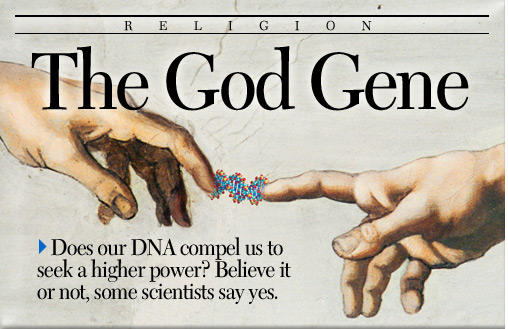
There are a few popular books going around about some new “discoveries” in the brain. Purportedly, our faith is wired into our Genes. I have my suspicions about this hypotheses and how they reach their conclusions. Nevertheless, some Christians might be getting scared that this assertion might be true, and it is the only reason we may have faith.

Rest assured; there is nothing to fear. Even if it is true that some people are wired to faith (although I do not necessarily agree), it makes no difference. Let me save you tiring library research. The bottom line is this: regardless if we are wired for faith or not, it tells us nothing about whether or not the claims of Christ are really true. In other words, the validity of Biblical texts and the historicity of Christ are either true or false regardless of how you are wired.

For this reason, I take no “stress” to the “God Gene” hypothesis.

Labels: , , ,